Empowering Youth and Transforming Lives: The Buzz of Beekeeping in Kabarole
By Ainganiza Stephen – Communication Officer, Kabarole
In the lush Mountainous landscapes of Kabarole District, a remarkable initiative is taking root, empowering over 512 beekeepers and producing an impressive 40 tons of honey annually. This initiative, driven by the Kabarole Youth, is not merely about honey production; it represents a transformative movement aimed at enhancing household incomes and fostering sustainable livelihoods among the youth.
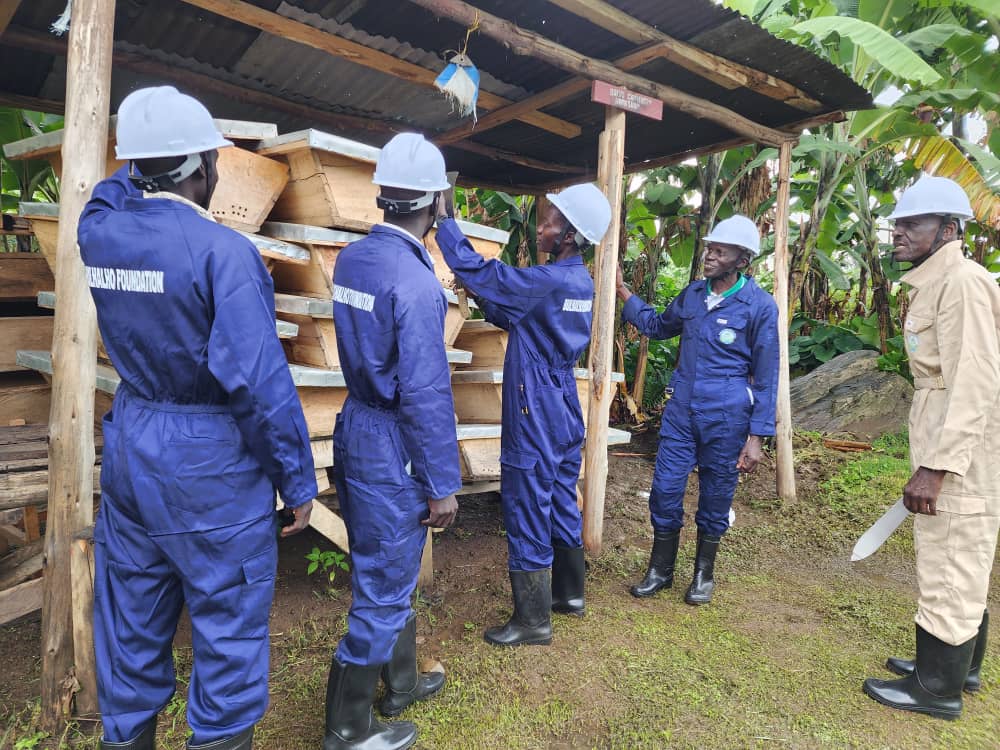
Kikora Masereka Yonah, a 35-year-old media practitioner at Voice of Tooro 101 FM and from Kyabwire zone, Nyakitokoli parish, Karangura mountainous sub-county, is the visionary behind the Bulhalho Foundation, which he founded in 2017. The foundation began with just 45 youths, many of whom were former members of the Rwenzururu Royal Guards (Kirumira Mutima), who had surrendered to the government after engaging in rebellious activities due to a lack of employment opportunities. “We provided them with skills in beekeeping, hairdressing, carpentry, and bricklaying as pathways to employment, and since then, over 1,349 youths have graduated,” Kikora explains.
“Beekeeping is a lucrative business that everyone, especially unemployed youth, should engage in,” Kikora emphasizes. “It’s not labor-intensive, requires low capital, and pays well.” This shift in the industry is noteworthy; traditionally male-dominated, beekeeping now sees 27% of its participants as women and 35% as youth. The market for bee products is thriving, both locally and internationally, providing ample opportunities for the beneficiaries.
With branches established in Karago Town Council, Fort Portal Tourism City, Ntoroko and Bundibugyo, the initiative has formed 19 groups of beekeepers in the region, generating a staggering total of 480 million shillings from honey production. This success is bolstered by partnerships with organizations like the German Embassy and Bees Abroad, which provide training resources to ensure sustainable practices.
The Ripple Effect of Beekeeping
The benefits of beekeeping extend far beyond financial gain. Kikora highlights its role in reducing gender-based violence and unemployment while promoting environmental conservation through tree planting for forage. “Beekeeping supports households and institutions, and it involves all ages at the family level,” he notes.
Success stories abound among the trainees.
Nyama Ronald, a 24-year-old from Kibaga B, proudly shares how his training in beekeeping has transformed his life. “I attained a certificate in beekeeping and apiary management from the Directorate of Industrial Training at Bulhalho Foundation. As a beekeeper, I engage in value addition, inspection, installation, setting, and harvesting, which pays me over 400,000 shillings monthly. I use this money to support my family and pay for my children’s education.”
Similarly, Natukunda Evas, a 31-year-old beekeeper from Buhikira zone, Kamabale parish, expresses her gratitude for the training she received. “After the training, I was given eight bee hives. Having been in the beekeeping business for two years now, I can confidently say it’s a lucrative venture that has increased my income. I encourage the youth and women to engage in beekeeping, as it requires minimal inputs and little supervision.”
Overcoming Challenges
Despite its successes, the beekeeping initiative faces challenges, including land fragmentation and misconceptions about beekeeping. Mr. Eribankya Nicolas, a trainer at Bulhalho Foundation vocational school, emphasizes the importance of proper training and care for the bees. “We’re currently receiving a good number of people interested in bee training from various districts such as Arua, Gulu, Lira, Kamwenge, Bunyangabu, Bundibugyo,Ntoroko ,Kabarole, and it’s vital that people understand the potential of this enterprise,” he states.
The impact of the training is evident in the testimonies of participants like Mr. Charles Opobo, chairperson of the Lira Community Bee Keepers in Barowo village, Alworo parish, Amach Sub County. Found in a training session, Opobo recounts how the training has equipped them with essential skills, enabling them to support 110 beekeepers in their group. “We started our group to address the high dropout rates among youth, and beekeeping has become a vital intervention,” he explains adding that many youth are engaged in beekeeping enterprise.
Mr. Ogwal Samuel, a member of the Lira Community Bee Keepers, reveals how the training has changed his life. “Before I came here for training, I didn’t know how to separate bee hives, colonize them, or stock them. But now, the knowledge we acquired will be used to transform my life and the entire community in Lira.”
A Greener Future
In addition to beekeeping, Mr.Ogwal, who quit journalism for not paying well, said Lira Community Beekeepers operates central tree nursery beds, distributing indigenous tree species that are environmentally friendly to the community at a free cost and plant some in their plantations for income generating. This holistic approach not only enhances the livelihoods of the community but also contributes to a healthier planet.
As the Kabarole Youth continue to empower beekeepers and foster sustainable practices, the buzz around beekeeping is set to grow, transforming lives and communities in profound ways. With each drop of honey produced, a brighter future is being crafted for the youth of Kabarole.