Kabarole Chairman Advocates for Agro-Industrialization
By Stephen Ainganiza –Communication Officer Kabarole
Kabarole District Chairperson Dr. Richard Rwabuhinga has urged the government to support the establishment of an industrial park in the region to enhance value addition to agricultural products and create employment opportunities.
“Despite our rich agricultural potential, farmers in Kabarole and neighboring districts continue to experience low returns due to limited processing facilities and inadequate market access,” he stated. “We need an industrial park that can accommodate agro-processing plants, packaging facilities, and storage units to transform our agriculture into a source of wealth.”
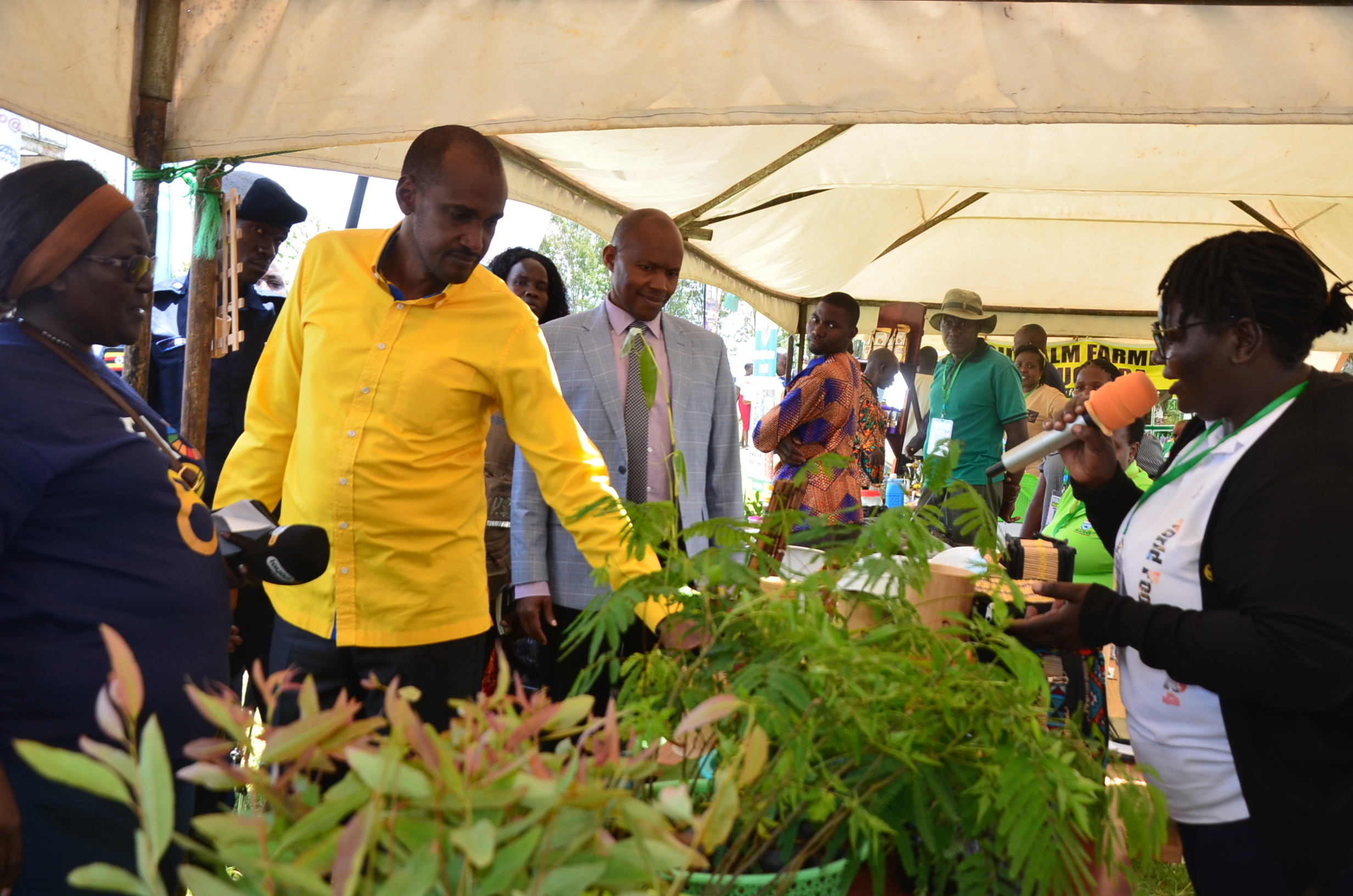
Dr. Rwabuhinga made these remarks during the World Food Day celebrations held at Rwebitaba ZARDI in Kabarole District.
Frank Tumwebaze, the Minister of Agriculture, Animal Industry and Fisheries, who was the chief guest at the event, reaffirmed the government’s commitment to agricultural transformation by focusing on three key enablers: agricultural research, access to financing, and balancing food production with ecosystem protection.
“Food is the universal equalizer, and we must engage in discussions about the sustainability of our food systems,” Tumwebaze emphasized.
He commended institutions like the National Agricultural Research Organisation (NARO) for their contributions to developing climate-resilient crops, improved animal breeds, and promoting modern farming techniques.
“Research is the foremost enabler of food security. The inputs, seedlings, technologies, and knowledge about agronomy all stem from research,” Tumwebaze asserted. “Next time, we should be recognizing our scientists for their invaluable work.”
The minister also called upon agricultural extension workers across the country to fulfill their responsibilities, noting that they are among the better-paid public servants and must deliver tangible results.
“There is a reason you are paid well,” he remarked. “You are not merely supervisors of programs; you are the vital link between government policy and the communities on the ground.”
He stressed that extension workers play a crucial role in enhancing productivity and must ensure that innovations reach farmers at the grassroots level.
Despite numerous government initiatives aimed at combating hunger and poverty, food insecurity remains a pressing crisis in many parts of Uganda, leaving millions vulnerable to malnutrition and hunger-related health complications.
Recent reports from humanitarian organizations and local authorities indicate that food insecurity levels remain alarmingly high, particularly in the Karamoja sub-region, parts of northern Uganda, and among urban poor communities.
According to the Food and Agriculture Organization (FAO), while Uganda continues to make strides toward achieving food security, significant challenges persist. The organization reports that approximately 1.7 million people still face acute food insecurity, with 29% of children experiencing stunting and nearly half of all women suffering from anemia.
The same report highlights that agricultural productivity remains low due to high post-harvest losses and widespread land degradation, with 40% of arable land already affected.
Dr. Willington Bessong, Country Team Leader for FAO’s Emergency Program on Transboundary Animal Diseases, emphasized the urgency of building resilient agrifood systems through partnerships and sustained investment.
“This year’s theme reminds us that no single actor—be it the government, researchers, extension workers, farmers, civil society, academia, or development partners—can address these challenges alone,” he stated.
Figures from last year’s Uganda Bureau of Statistics (UBOS) report indicate that only 54% of households in Uganda were food secure. The Ankole sub-region had the highest proportion of food-secure households at 70.4%, while Karamoja recorded the highest proportion of severely food-insecure households at 62.9%.
Dr. Bessong urged the government to adopt a holistic, cross-sectoral policy approach that prioritizes access to affordable and nutritious diets for all Ugandans.
FAO emphasized the need to invest in smallholder farmers, particularly women and youth, reduce post-harvest losses, and improve market access through sustainable agricultural practices that protect soil, water, and biodiversity.The World Food Day was commemorated under the theme : “Hand in Hand with the better food foods and better future”.
While others were showcasing foods, KRC Uganda partnered with Kabarole District Local Government through an interactive nutrition clinic.
A total of 86 people, 33 males and 53 females were supported to learn their nutrition statuses after being screened.
Overall the findings were an eye-opener to the district nutrition coordination meeting and the implementing partners.
30% of men screened were underweight and 60% of women screened were overweight, mostly youth.
These results remind us that nutrition isn’t just about eating enough, it’s about eating right.
“Hand in Hand for Better Foods and a Better Future”
Do you know your nutrition status?